

This year, UnTours marks 50 years of helping curious, independent travelers unpack once, settle in and discover what it truly means to live like a local. And for exactly half of that remarkable journey, since 2000, Ellen Peters has been here, keeping the books balanced, the details right and the whole operation grounded in the care it takes to do this kind of work well.
26 years is a career built on trust—trust in the people around you, trust in the work itself and trust in something larger than a job description. As UnTours’ Accounting Director, Ellen may work with numbers, but what has kept her here for a quarter century (more, actually) is something much harder to quantify: a deep belief that what this company does really matters.
So we sat her down and asked her the good questions. About the colleagues who have her back. About the Swiss train station playground that changed the way she sees the world. About getting gloriously lost in Portugal on a bus to nowhere and ending up somewhere extraordinary. And about what it means, really, to travel differently.
We are so grateful for Ellen’s 26 years of steady, dedicated work at UnTours. Her commitment to this company and its mission is woven into everything we do, even if you never see it on the itinerary.

Looking back on 25+ years with UnTours, what continues to inspire you to do this work?
Honestly, it starts with the people. That might sound like something everyone says, but I mean it in a very specific way. The people at UnTours, here in the office and around the world, are genuinely good humans. They care about what they do and why they do it. After 25 years, that hasn’t changed, and I don’t take that for granted.
I also feel a deep sense of gratitude that I got to know Hal and Norma early on. What Hal built wasn’t just a travel company; it was a philosophy. A way of thinking about how business can do something meaningful in the world. It shapes how you show up every day, even in accounting.
And then there’s the product itself. My first UnTour was genuinely formative. It changed the way I travel and see the world forever. You come home and you realize you can never go back to traveling any other way. That experience, and then watching thousands of other people go through the same experience. That keeps me here.
Why do you think long-term relationships — with places, people and UnTourists — matter so much?
Because knowing people deeply means they have your back. It sounds simple, but it’s everything. I’ve spent hours on the phone trying to untangle some logistical mess, and what made it manageable, sometimes even funny, was that we actually knew each other. You can work through hard things with people you trust.
The same goes for the team. When someone’s having a rough day, people here notice. They step in. They take something off your plate without being asked.
As for what I do for a living? I’ve stopped trying to give a short answer. After 25 years, there isn’t one. You get to explain what an UnTour actually is, what the Foundation does, who Hal was, and why any of it matters. It’s a big story. And honestly, I think that’s a sign that the work is real and very special.
Over the years, is there a moment that best captures what meaningful travel truly means to you?
Switzerland. 2003. My sister, her husband, their two small daughters, and me. We were at a train station, one of many, and there was a playground right there across the street. And we just stopped. The kids were delighted, obviously, but I was the one who couldn’t stop thinking about it.
I looked it up later. Those playgrounds exist for very practical reasons: they keep kids away from the tracks, they create a reason for families to arrive early, and they make the station a community space rather than just a transit point. Trains. Children. Community. Safety. All woven together into something functional and joyful.
Back home, I kept thinking about our anti-loitering benches: the ones with the armrests specifically designed so you can’t lie down on them. The contrast was stark. It made me ask, what does our infrastructure say about what we value? It made me think about “what could be” and wish I could fix things at home. That’s what travel does when you slow down enough to notice things. It doesn’t just show you somewhere else; it holds up a mirror.
From playgrounds at train stations to elves and marble runs on hiking trails, the idea that public money goes toward something like that—playful, communal—that’s a cultural value. That’s the thing you wish you could bring home.

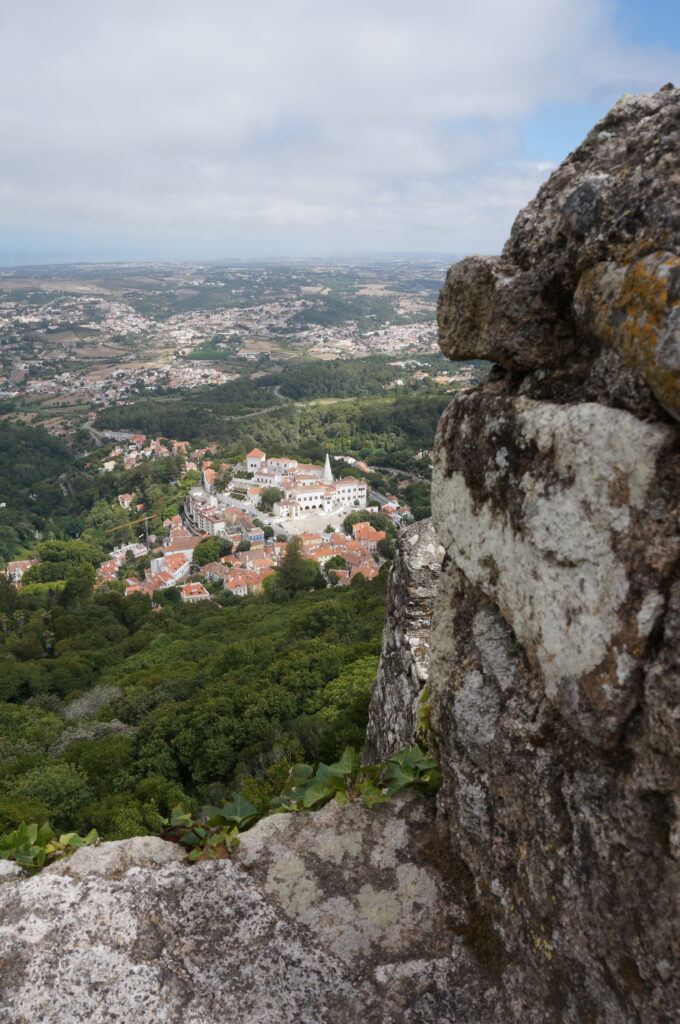
You chose Sintra as your favorite UnTours destination — what do you love most about it?
It’s hard to pick one thing about Sintra. The palaces are stunning — and there are so many of them, and several you can easily hike up to, which I loved. It feels like a small town that happens to have castles on the hillside. The palaces make you feel like you are stepping into a fairy tale. And as we meandered around town, we could glance up and see them dotting the hillsides. That never got old.
I also loved the gardens at Montserrat Palace, which reminded me of our local Longwood Gardens. The Montserrat gardens were beautifully maintained and showcased various ecological climates, including desert-like sections, which we could never have at home in Pennsylvania. We strolled through the gardens for hours, appreciating the diverse landscapes.
But the story I keep telling is about the bus. Our UnGuide had explained how the transportation passes worked, and one day we got on a bus that skipped the stop we intended to get off at. We had no idea where it was going. We didn’t speak the language. We had no plan. And we ended up at Cabo da Roca—the westernmost point of continental Europe. Cliffs, sea, a dramatic sunset, and us completely unprepared, with only a bag of Pasteis de Nata pastries we’d impulsively bought at the bus station, that suddenly seemed very wise. We had to piece together how to get back using broken conversations with bus drivers, and we managed it. Happy ending.
That’s an UnTour. You go somewhere you never would have chosen, and it turns out to be exactly right.
The other thing I’ll pass along: at Quinta da Regaleira, do the route in reverse. Our UnGuide told us that most visitors follow the same order, so if you go the opposite direction first thing in the morning, you’re essentially walking against the crowd. More open spaces, shorter waits, a completely different experience. That’s exactly the kind of tip you can’t get from a guidebook.

You’ve mentioned public transit a few times — it seems to be a real thread in how you experience travel.
It really is. I wish it was all we used. I know that sounds strong, but I mean it. When you’re on a train or a bus, you’re around people. You can talk to them, or just observe them, or read, or think. It’s not lonely in the way that sitting in a car for hours can be. And the environmental piece matters to me — it always has.
But I think what I love most is that public transit puts you in contact with the rhythm of a place. You’re using the same system as the people who live there. That’s not incidental; that is the experience. The playground at the train station, getting lost in Portugal—those things only reveal themselves when you’re moving the way locals move. When you slow down and use what’s actually there.
26 years of showing up. Of caring about the details. Of understanding, deeply, that the numbers behind a company like UnTours represent something real: trips taken, lives changed, communities supported and a world made a little better through the way people choose to move through it.
Ellen, we are so proud to have you as part of this story. Here’s to everything we’ve built together and everything still ahead. Thank you for 25+ extraordinary years of balancing it all!