
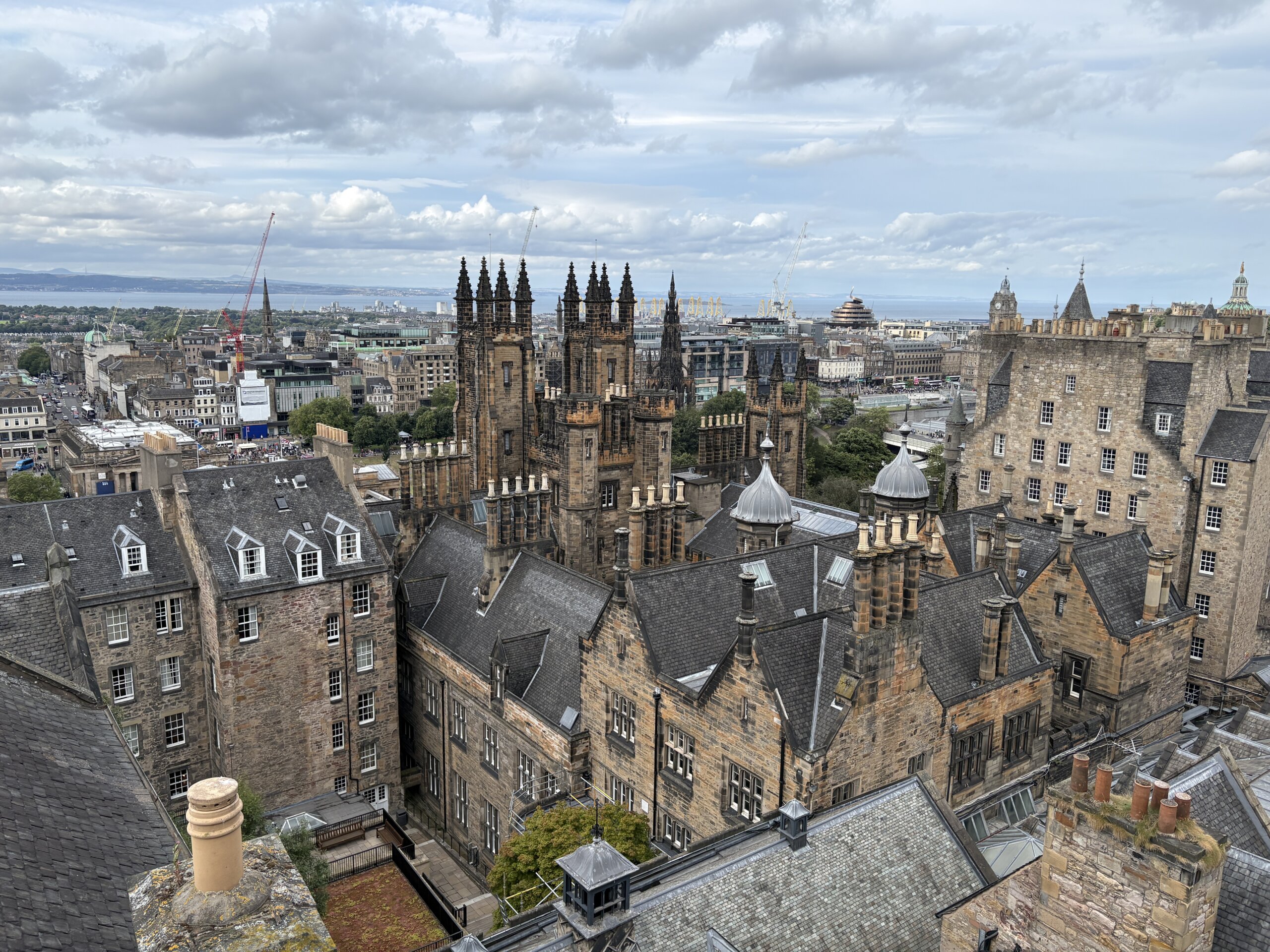
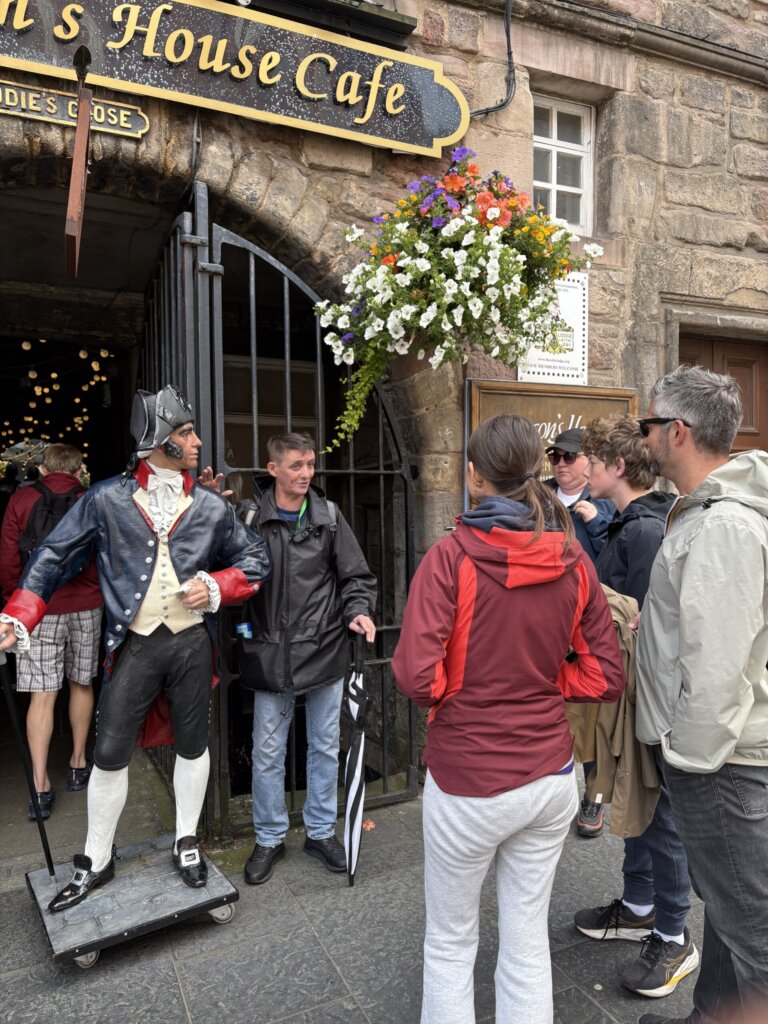
There’s a close off the Royal Mile so narrow you’d pass it a hundred times without a glance. Sonny stops, turns and waits for us to notice it. Then he guides us in.
Inside is an Edinburgh the guidebooks don’t keep. And the man holding the key knows these streets in a way no guidebook writer ever could. He has lived on them.
Every city keeps two versions of itself. There’s the one it saves for the postcards, the tartan in the shop windows, the skyline at dusk from Calton Hill, and then there’s the real one, layered and complicated and gloriously alive, that most visitors walk straight past. Edinburgh hides that second city in its closes: the slim, easy-to-miss passageways threaded through the Old Town. And the thing about a city that hides its closes is that it tends to hide its people the same way. This is a morning about opening both.
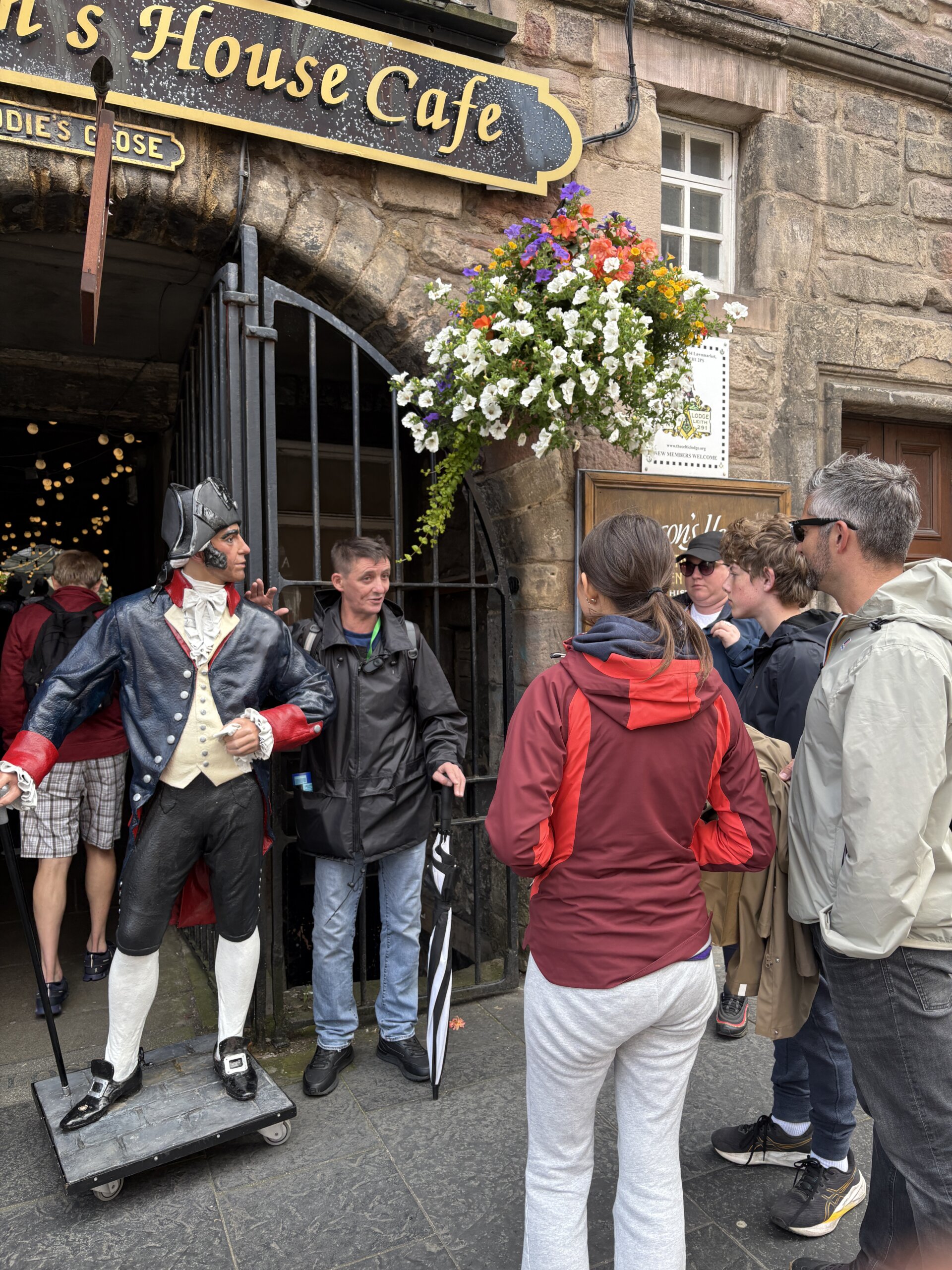
Two guides, one city, no scripts
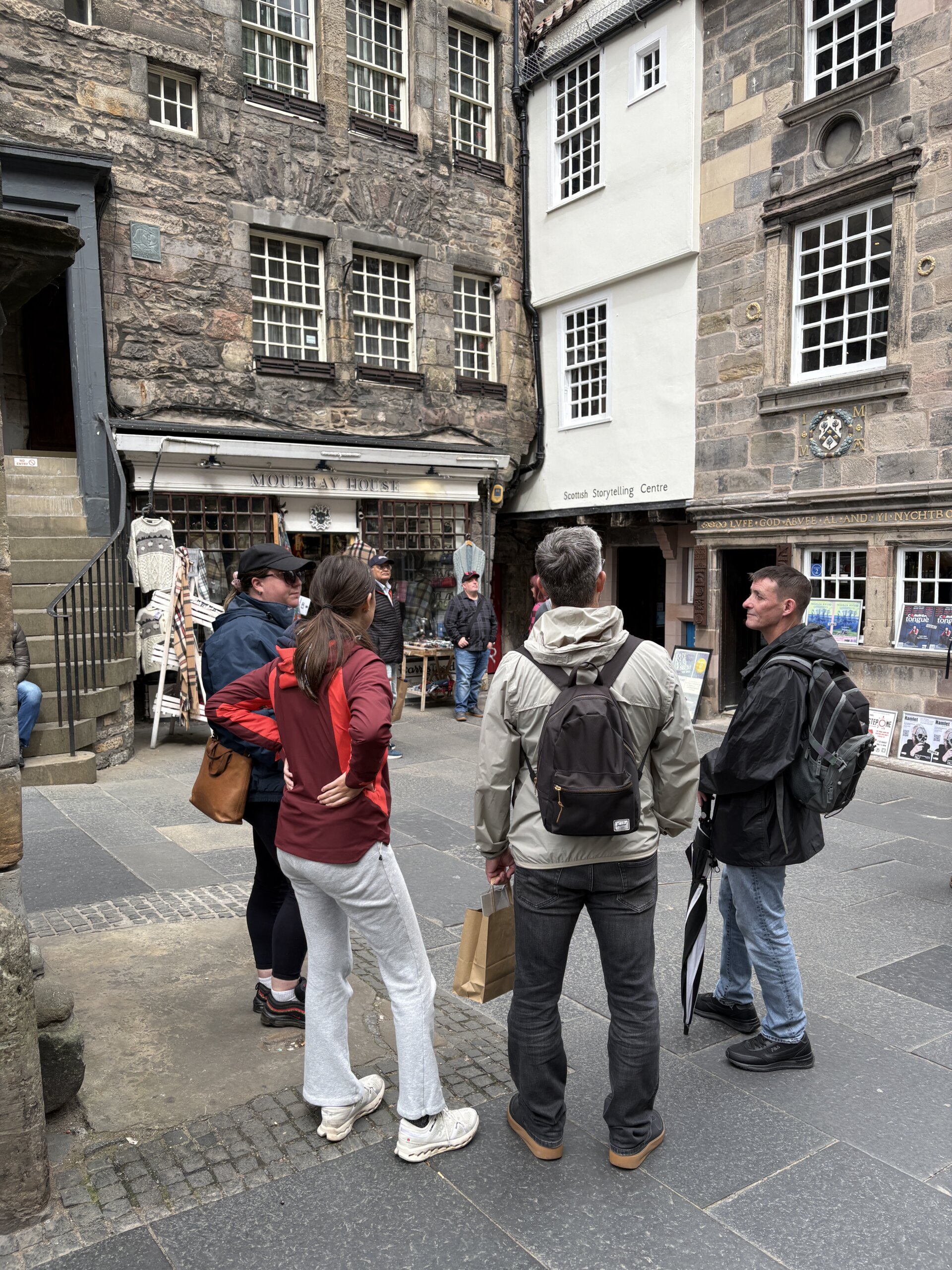
After a light brunch, we were ready for our walking tour of the Old Town with Invisible Cities. First delightful surprise: we had two guides. Sonny and Gayle led us together, and watching them work was its own small pleasure. Two complementary styles with a cadence and stories all their own, one bringing energy, the other calm, handing the narrative back and forth.
Second surprise, and this is the one that makes Invisible Cities unlike any tour we’ve ever taken: the guides research, write and lead their own walks. There is no script. Each guide is supported in choosing their own theme and route and fills it with the stories they care about most. So the Edinburgh you get is genuinely theirs — personal, specific and told with the authority and humanity of someone who knows these streets from the inside out.
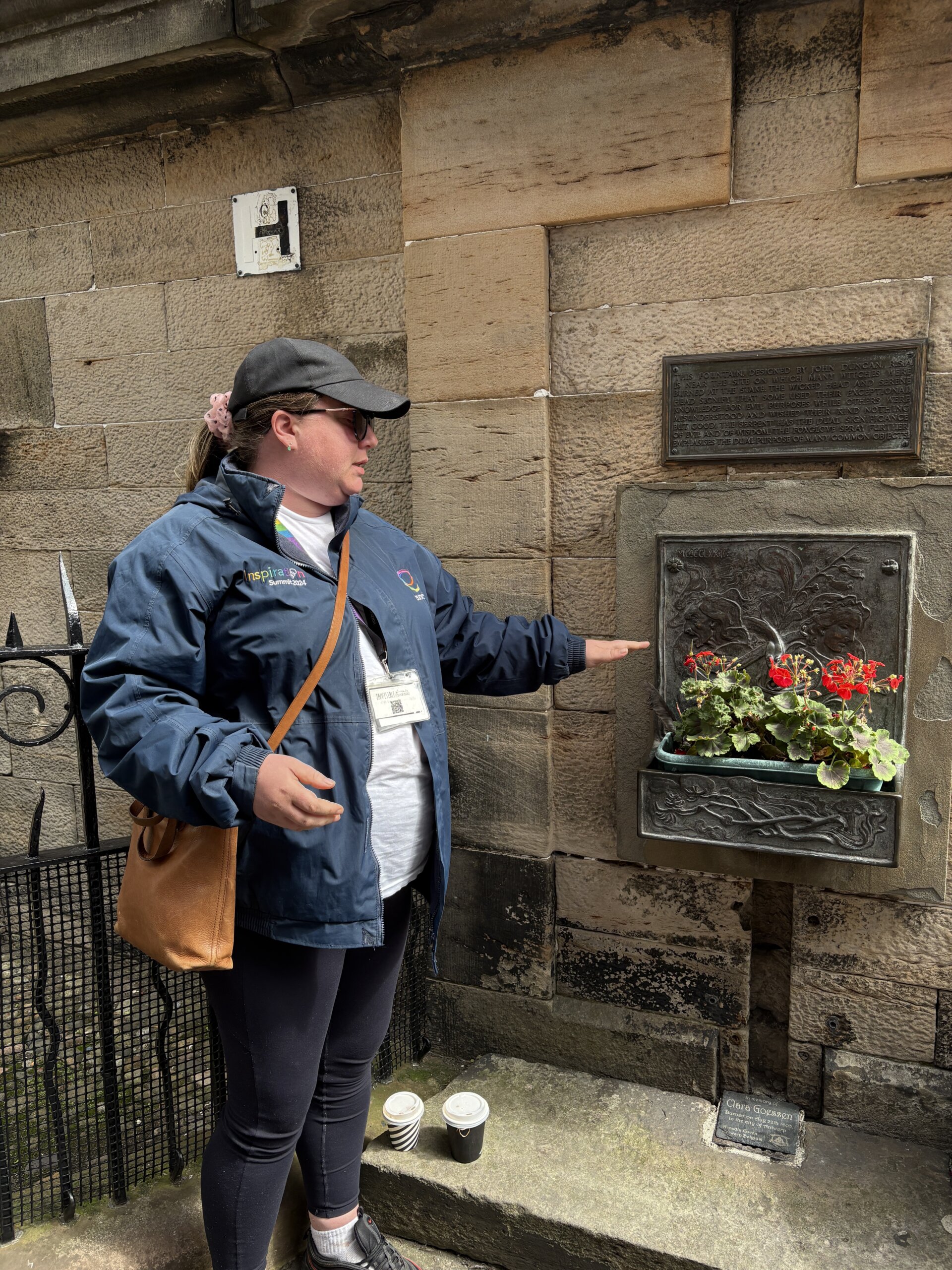
The stories the postcards leave out
Sonny often leads the Crimes and Punishment walk, all the shadowy, gripping history of a city with a very dark past; the underbelly, as he calls it. He’s also busy building a new Writers’ Tour. Gayle leads Women of Edinburgh, surfacing the fierce, brilliant, overlooked women who shaped this place and rarely make the guidebooks. Between the two of them we got an Edinburgh far richer and truer than anything we’d have pieced together ourselves.
They were honest with us, too. The guides of Invisible Cities have all experienced homelessness, and they spoke about it openly, along with the people and organizations working to address it today. They pointed us generously toward the wider web of good happening across the city: Social Bite, the social enterprise turning coffee and sandwiches into jobs and homes; Crisis Skylight, just along the Canongate; and Sparkle Sisters, a pamper evening that restores a little dignity to women affected by homelessness.
Unsider tip: this is not a rushed, box-ticking tour. Ours ran a rich hour and a half, and every minute of it felt human and real — the way seeing a city should feel. Come with curiosity, a comfy pair of shoes and a refillable water bottle. Sonny will show you where to fill up.
A different kind of tour guide
Here’s what makes the whole thing sing. Invisible Cities trains people who have experienced homelessness to become professional walking-tour guides of their own cities — and it treats them as exactly that: professionals, storytellers, experts. Intelligently produced cultural walks, led by people telling the story of streets they know better than anyone.
And the impact runs far deeper than the walk itself. It works three ways — training, support and development. Some graduates go on to lead their own tours, sharing hidden corners only they know. Others contribute behind the scenes, or use Invisible Cities as a stepping stone toward new jobs and new chapters entirely. (Not everyone chooses to guide, and that’s very much by design.) Everyone gets one-to-one support toward their own goals, with part of the profit going directly into personal milestones — further education, or even reconnecting with family and friends. The walk you take is really the visible tip of something much bigger and quieter happening underneath.
The woman who started it
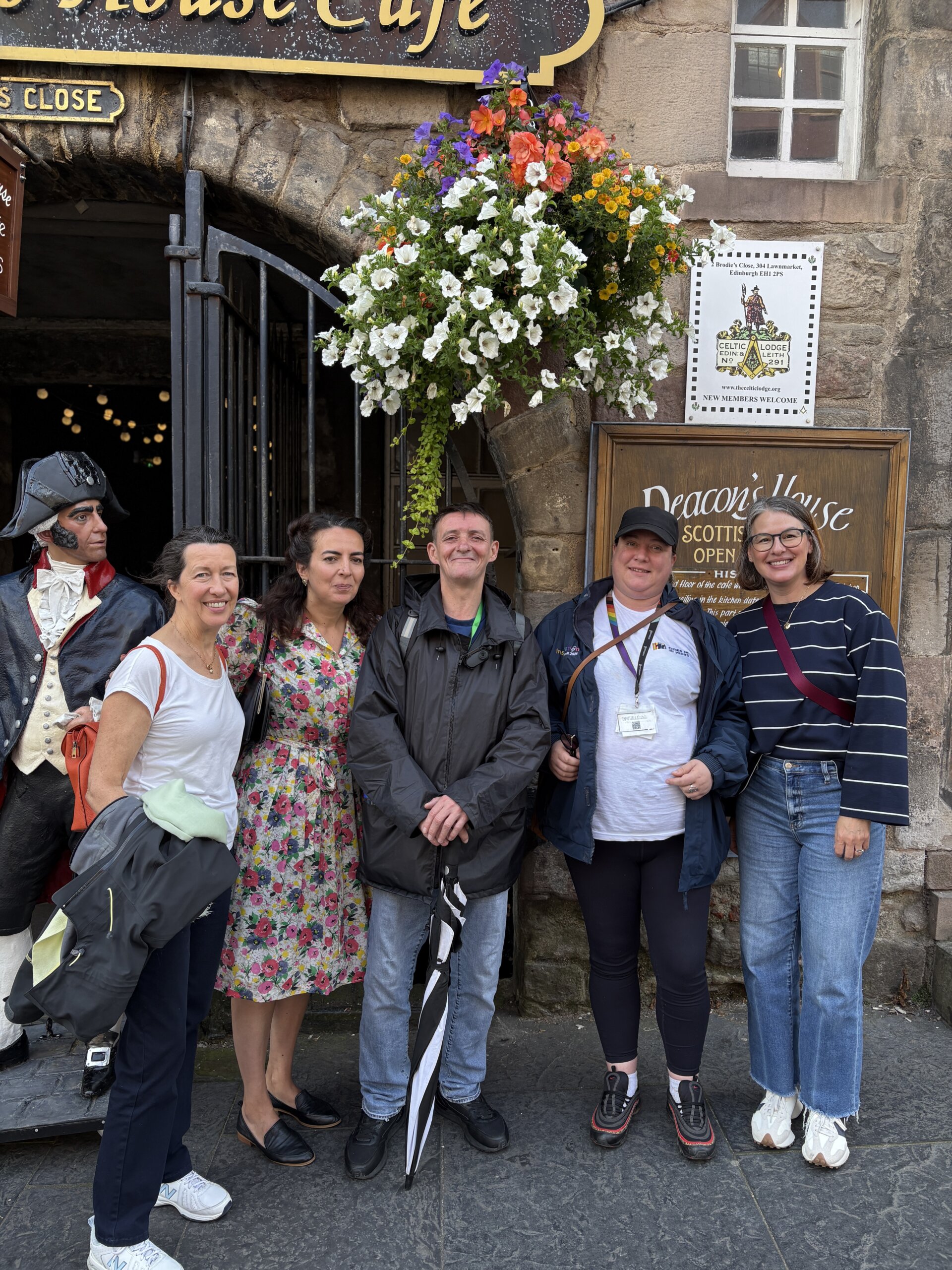
We’d actually begun the day over brunch at Deacon Brodie’s, and if you know your Edinburgh lore, you’ll appreciate the wink. Deacon Brodie was a respectable city councillor and cabinetmaker by day and a burglar by night, a man of two faces, said to have inspired Robert Louis Stevenson’s Jekyll and Hyde. A more fitting place to begin a walk about a city’s hidden layers.
There we met Zakia Moulaoui Guery, founder and CEO of Invisible Cities, and her own path to it is a story in itself. Originally from Saint-Étienne in the South of France, she moved to Edinburgh at 21 and spent years with the Homeless World Cup Foundation, where she saw firsthand how community and purpose can change a life. After a serious illness, she took time to travel and volunteered in a refugee camp on the Greek island of Lesvos. She came home certain of one thing: people living on the margins carry extraordinary stories and skills, and an industry that looks straight past them is missing out.
She has a way of putting it that stuck with me. When you’re experiencing homelessness, she says, people don’t look at you — they look through you. Invisible Cities turns that on its head, placing the overlooked person at the center of the experience and letting them tell the story their way.
The world has noticed. Zakia was named a National Geographic Traveler of the Year in 2024, Invisible Cities has won a Lonely Planet Best in Travel Community Award, and her work has been featured by the BBC, The Guardian and beyond. Now in its tenth year, the enterprise runs walks in Edinburgh, Glasgow, Manchester, York, Cardiff and Aberdeen, with more cities on the way. She calls the whole philosophy “doing tourism differently” and once you’ve felt it, no ordinary city tour ever quite compares.
What travel for good actually looks like
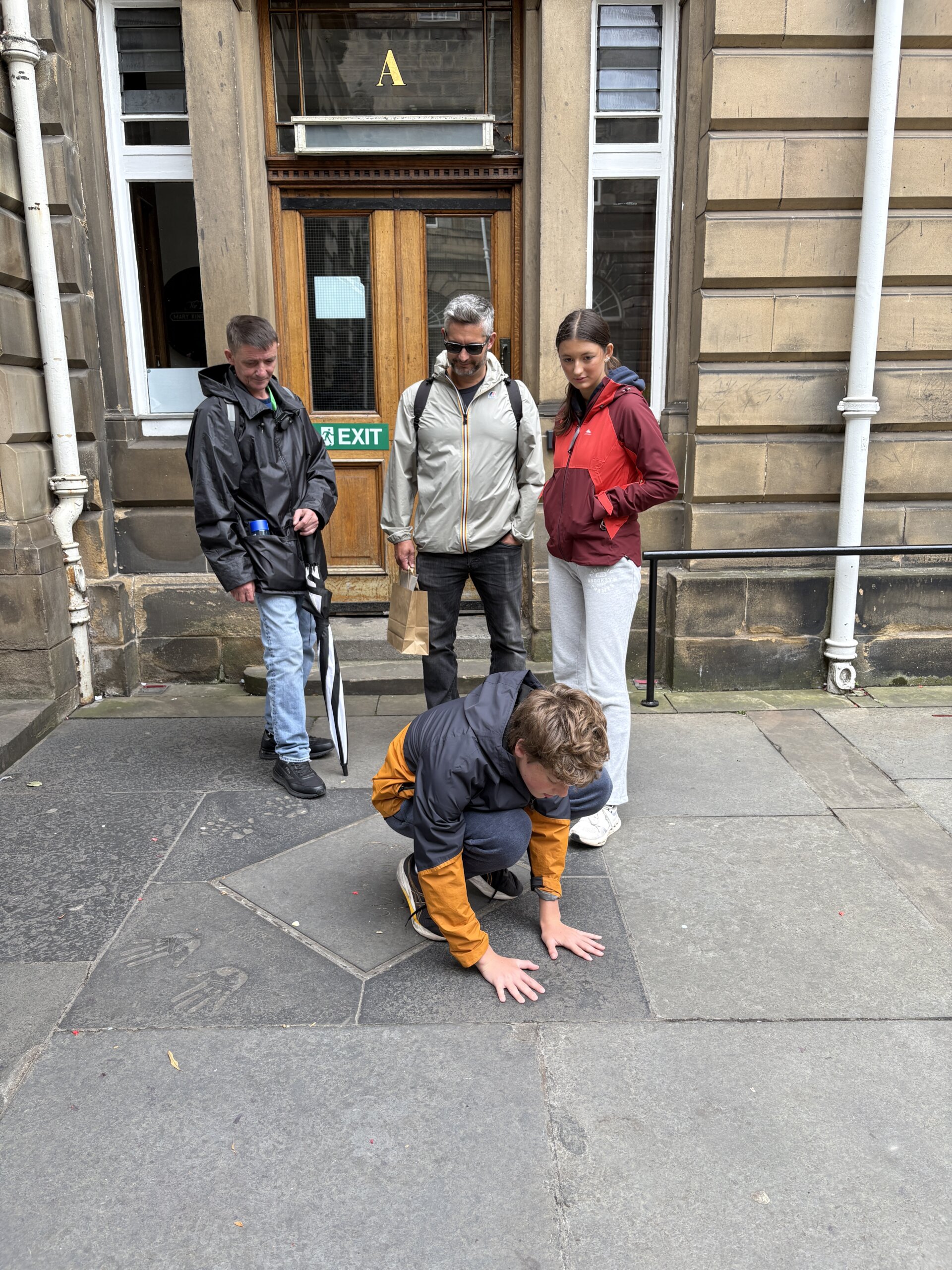
This walk wasn’t a random add-on. It was an included experience on our UnTour, and a rare, tangible chance to see how our trip connects to something larger. UnTours is owned by the UnTours Foundation, which reinvests 100% of profits into social enterprises creating real change around the world. Invisible Cities is one of them.
So when you travel with UnTours, you don’t just hear that your trip does good somewhere far away and abstract. On this walk you’re standing right beside it. You shake hands with the guides. You watch the whole model working in real time on the very streets you’re exploring.
Unsider tip: if your UnTour takes you to Central Scotland, you can do your Invisible Cities walk in either Edinburgh or Glasgow — it’s within reach from your homebase, and it’s included.
The kirkyard, and the garden beyond it
Near the end, Gayle and Sonny walk us into the Canongate Kirkyard. Gayle stops at a grave and tells us about Agnes McLehose or Clarinda, if you know your Burns, though most people only ever know her as his. For two hundred years she’s been remembered as a footnote to a famous man. Standing over her stone, Gayle hands the story back to the woman it belongs to.
A little while later, among the same stones, Sonny mentions that he used to sleep here. It was quiet, he says.
Two people the city once walked past, in one small yard: the woman it forgot and the man it looked straight through, both of them here now at the center of the story, telling it their way.
Then the last surprise of the morning. A few steps on, Sonny and Gayle lead us through an entrance most visitors never notice and into Dunbar’s Close; a hidden seventeenth-century garden, green and hushed and completely still, a stone’s throw from the busiest street in Scotland and a world away from it. We’d never have found it on our own. That, in the end, is the whole difference: the Edinburgh you’re shown, and the Edinburgh you’re let into.
A morning spent walking Edinburgh’s hidden layers with two guides who shared their city and their trust is our most lasting memory of Scotland. It’s the difference between visiting a place and truly seeing it. And it’s the quietly radical difference between a trip that entertains you and one that stays with you for good.
Curious how a single trip can ripple outward into real, lasting good? That’s the heart of the UnTours way, and this is just one story of many. Come and see what travel can be.