
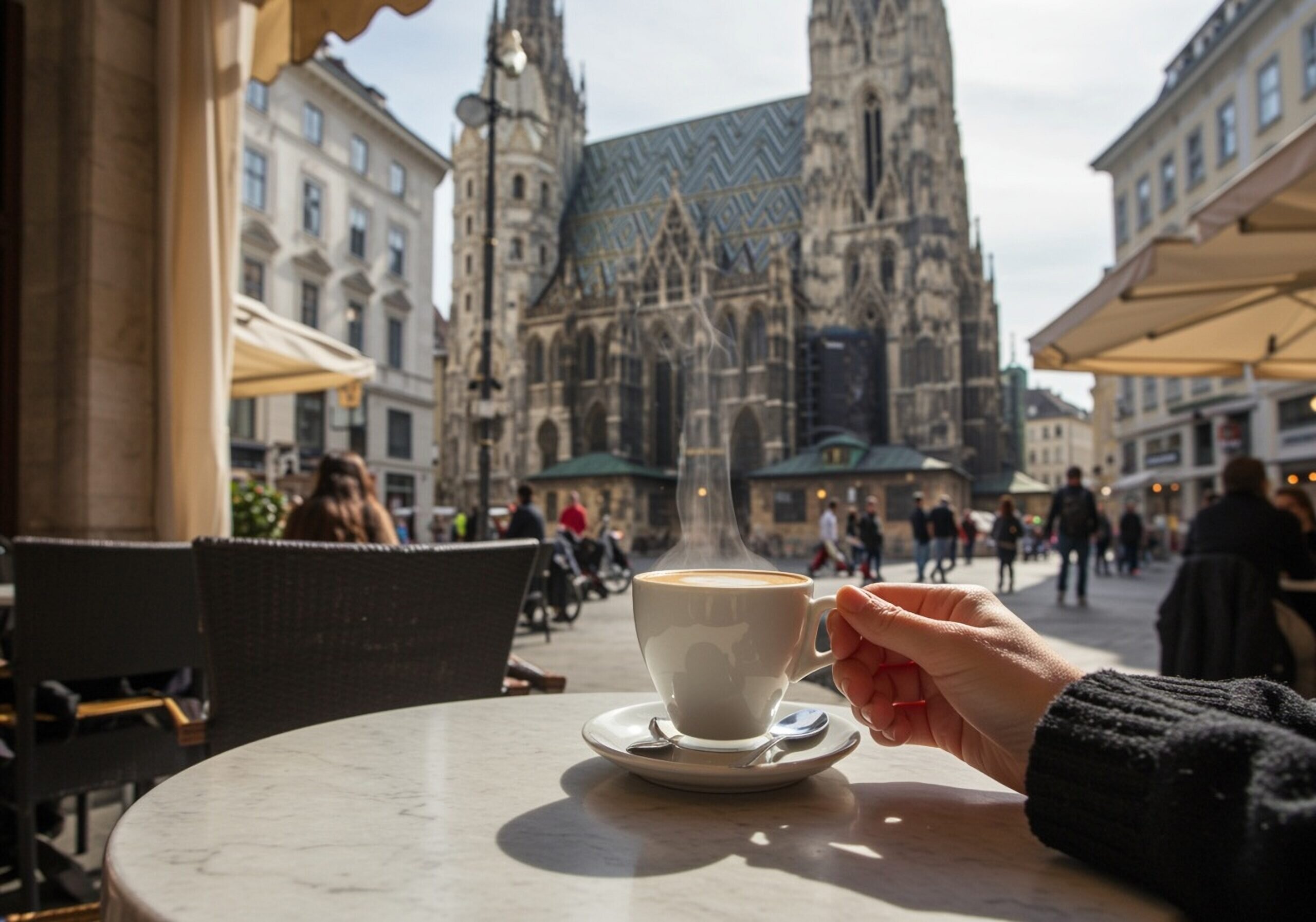
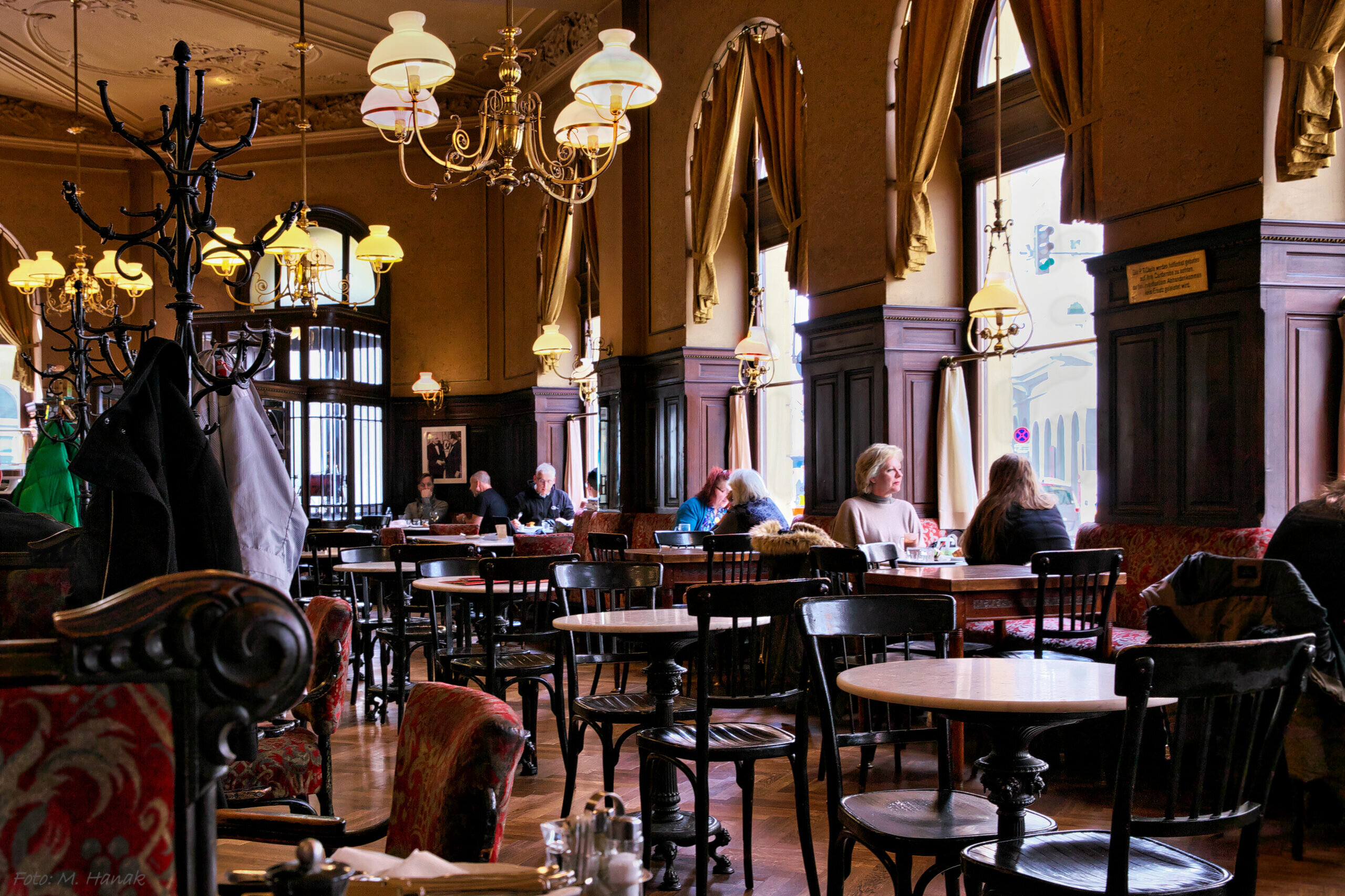
There’s a moment that happens to almost every UnTourist in Vienna. You settle into a curved bentwood chair, a copper tray lands softly in front of you — a Melange in a porcelain cup, a small glass of water beside it — and something in you just… exhales.
You’re not in a hurry. Nobody is asking you to move along. The waiter, impeccably dressed and magnificently unhurried, has already disappeared behind a marble counter. You pick up a newspaper, or you don’t. You watch a chess game unfold two tables over. You think about absolutely nothing in particular.bCongratulations. You’ve just discovered the most Viennese thing there is.
A Living Piece of World Heritage
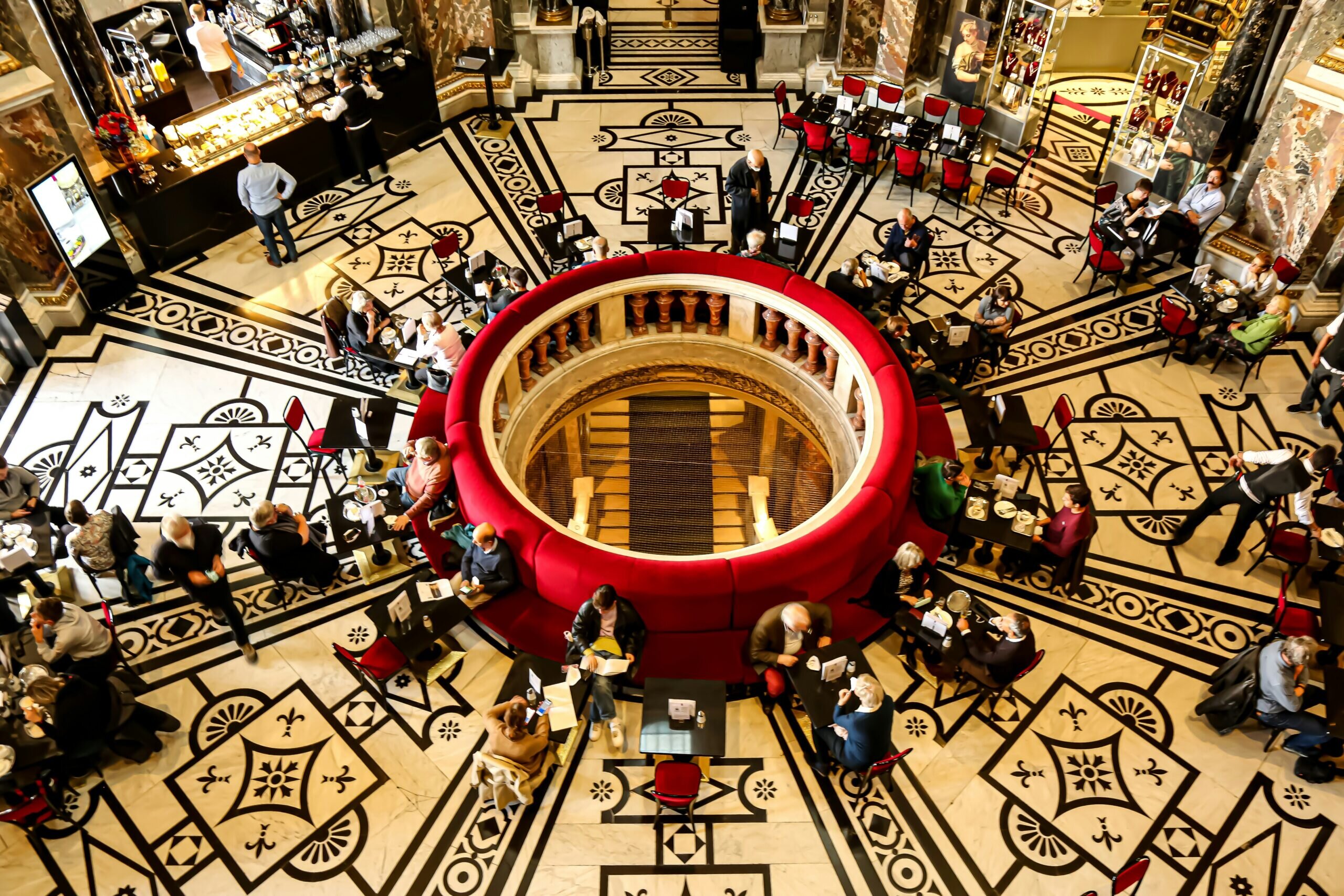
Vienna’s coffeehouse culture isn’t just beloved — it’s officially recognized as part of UNESCO’s Intangible Cultural Heritage, a distinction it has held since 2011. The UNESCO report specifically notes that coffeehouses are places where patrons “consume time and space, but only the coffee appears on the bill.”
Read that again. You’re not buying a drink. You’re buying *time*. Unlimited, unhurried, gloriously unscheduled time. For the price of a cup of coffee, a Viennese café is yours for as long as you care to sit in it. No one will rush you. No one will hover pointedly. This is practically a civic value in Vienna, and honestly, we think more cities should adopt it immediately.
Year-Round, Rain or Shine (and Especially Snow)
Here’s something the “best time to visit” crowd gets wrong about Vienna: there is no bad season for the coffeehouses. In fact, the city’s legendary grey winters — the kind that settle in with a certain velvet permanence — are arguably when café culture hits its full stride.
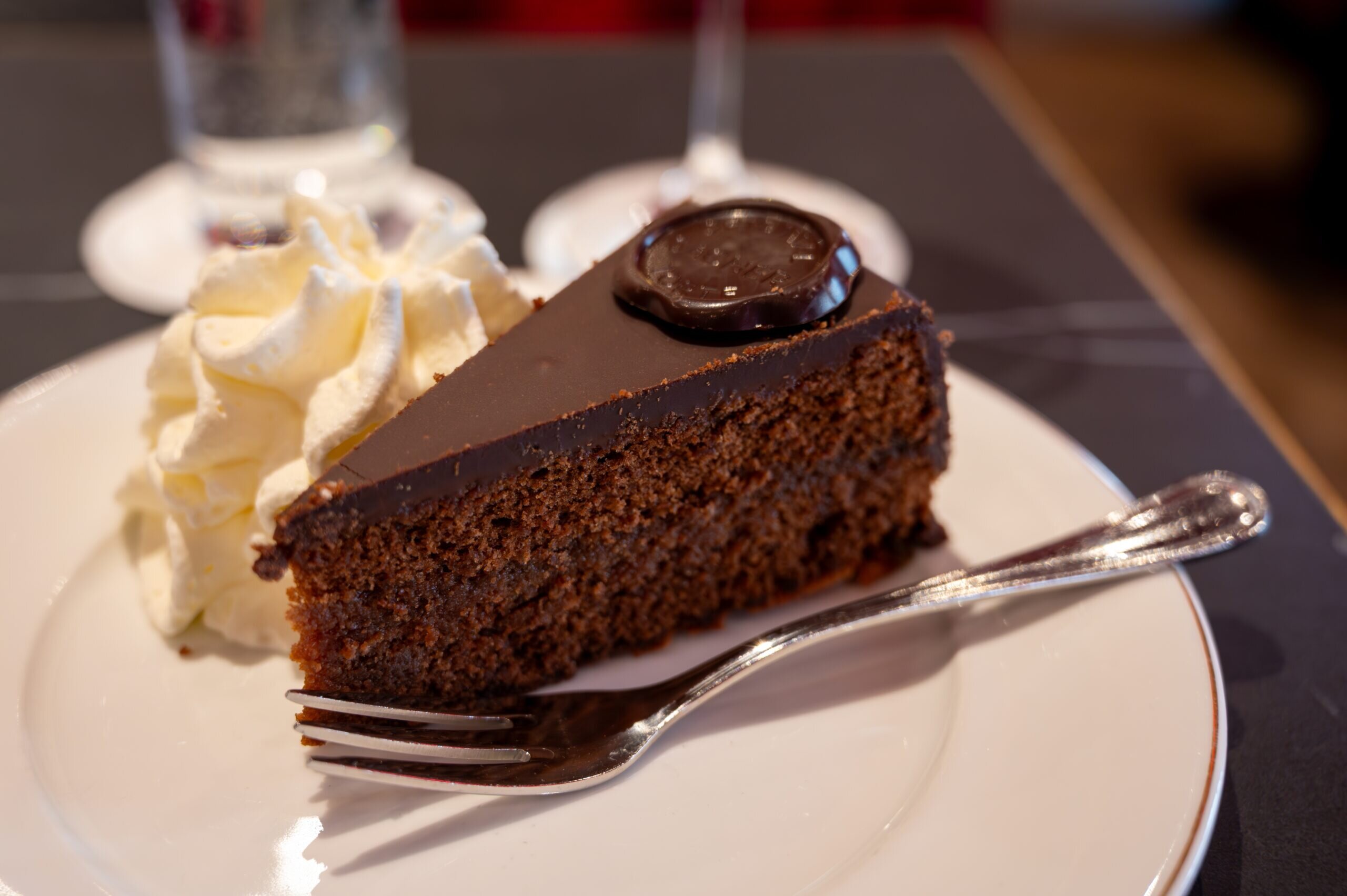
In January, when a cold fog rolls off the Danube and the streets outside are quiet and cobblestoned and beautiful, there is nowhere on earth better than a window seat at Café Sperl with a slice of Sachertorte and nowhere to be. In spring, the same café fills with an entirely different energy — lighter, louder, livelier — as the chestnut trees bloom outside and locals celebrate the return of the sun with the same enthusiasm as if they’d personally negotiated it.
Summer brings outdoor seating and long golden evenings. Autumn means the return of warm lighting and deep armchairs, chestnut vendors on the corners, and the particular comfort of stepping inside from the cold. The coffeehouses don’t close for the seasons. They simply change costumes. And every version is worth knowing.
What to Order: A Field Guide
Part of feeling local in Vienna is knowing your way around the coffee menu — because there are over 40 varieties, and ordering a “coffee” will earn you a patient but mildly quizzical look.
A few essentials:
- The Melange is the entry point — Vienna’s equivalent of a cappuccino, but milder and more refined. A shot of espresso softened with warm milk and a crown of foam. It’s the morning workhorse of the cafés, and it’s perfect.
- The Einspänner has a story behind it. Named after a single-horse carriage, this double espresso is served in a glass and topped with a generous mound of whipped cream — originally designed so coachmen perched on their boxes could keep their coffee warm while they waited. Practical. Delicious. Quintessentially Viennese.
- The Verlängerter is simply a slightly diluted espresso — milder than a straight shot, stronger than you’d expect. Think of it as the sensible middle ground.
And about that glass of water that arrives with every order: it originated as a way for coffeehouse owners to show off the quality of their water, especially after the Vienna Mountain Spring Pipeline opened in 1873. It’s been a standard of quality ever since, adopted in coffee cultures around the world. In Vienna, it was simply good manners — and then became tradition.
Of course, pairing your coffee with something sweet is a must. Vienna coffeehouses are famous for their cakes and pastries for a reason.
The Classics Your UnGuide Will Point You Toward
Vienna has no shortage of coffeehouses, and part of the joy of staying in one neighborhood for a week is getting to know the ones that become yours. But a few deserve a pilgrimage.
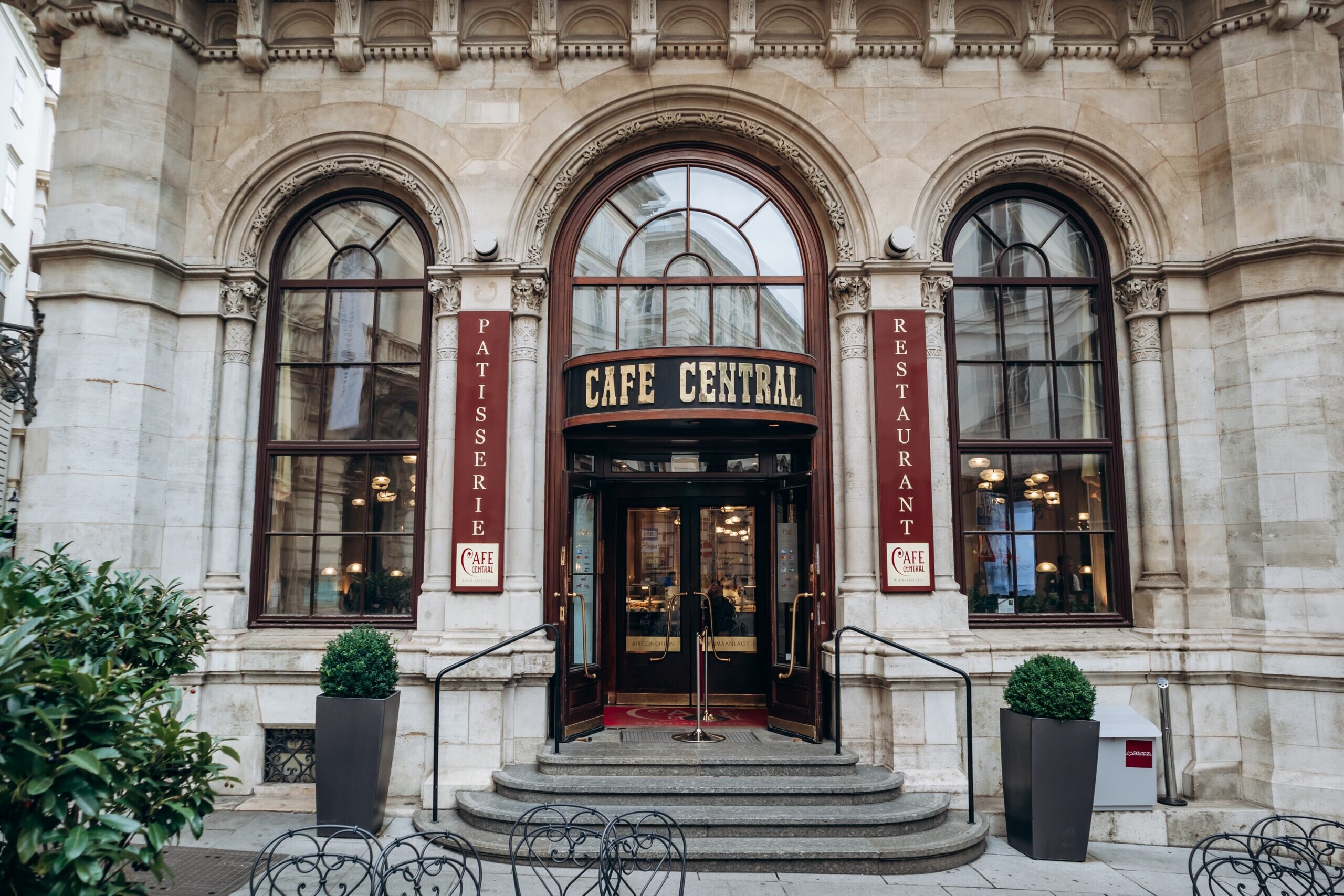
Café Central, tucked inside a soaring neo-Gothic palace near the Hofburg, is one of the most architecturally spectacular rooms in Europe. Café Landtmann on the Ringstrasse has been in operation since 1873 and counts Sigmund Freud and many a city mayor among its historical regulars.
Café Sperl in the 6th district is a little more lived-in, a little more neighborhood — and all the better for it. The bentwood Thonet chairs, the billiard table in the back, the quiet mid-afternoon hum of it.
And for something completely different: Café Schopenhauer in the 18th district manages to host a disco ball alongside its traditional café atmosphere, proving that Vienna is always a little more surprising than you expect it to be.
The Thonet Chair: A Design Icon You’ll Actually Sit In
Here’s a fun piece of trivia for your first café morning. The bentwood chair you’re almost certainly sitting in was first produced in 1859 and is among the most produced items of seating furniture in the world. Michael Thonet’s No. 14 — now No. 214 — with its elegant curved backrest and light steam-bent frame, was essentially invented for the Viennese coffeehouse and has never really been improved upon. It is the perfect café chair: comfortable enough for hours, beautiful enough to have earned its place in design history. Sit in it long enough and you’ll understand why.
The Art of Slowing Down
That’s the quiet secret that reveals itself when you spend a week — really live in a neighborhood rather than passing through it. By day three or four of an UnTour in Vienna, you’ll have a café. Not just a café, but your café. The one where you read the morning paper (they keep international papers, often on wooden holders, another delightful tradition). Where you know which table gets the afternoon light. That small, unhurried, utterly ordinary moment is worth more than a hundred landmarks.
Vienna’s coffeehouses are open year-round, morning to late evening, in every neighborhood from the grand Ringstrasse to the quieter outer districts. They’re not a tourist attraction. They’re just where Viennese people go to think, talk, read, and be. And for a week, if you do it right, they can be where you go, too. Ask your UnGuide for their personal neighborhood favorite. That’s the one you want.
Interested in experiencing Vienna as an UnTourist? Explore our Vienna UnTours and find out what it means to truly live in a city, not just visit it.