
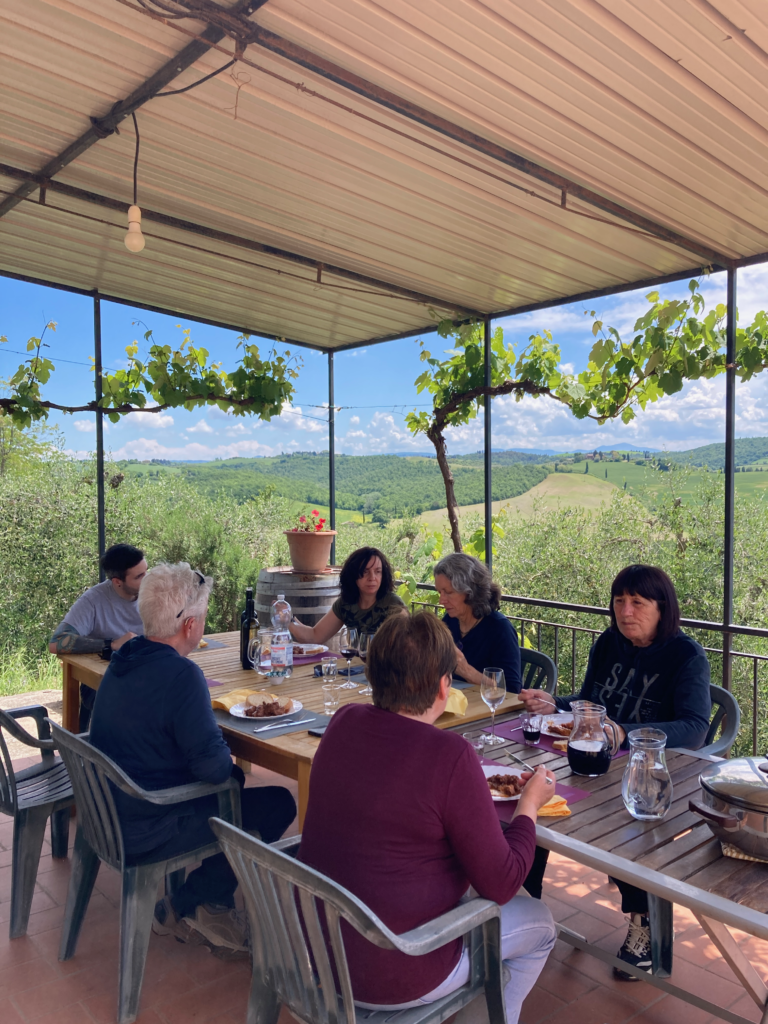
Before slow became a lifestyle or travel trend, it was a quiet act of resistance. A refusal to rush. A belief that food—like culture, community, and place—deserves time.
The Slow Food movement didn’t begin with a glossy manifesto. It began with a shared unease: a sense that something essential was slipping away as speed, convenience, and sameness replaced local rhythms and traditions.
For travelers who care about how a place feels, not just how it photographs, Slow Food offers a powerful way of understanding the world. It also mirrors the philosophy behind slow, supported travel—staying long enough for meaning to emerge.

A Protest That Started at the Table
In 1986, plans were announced to open a McDonald’s near Rome’s Spanish Steps. To some, it was a symbol of modern convenience. To others, it signaled a deeper loss.
Italian journalist and food activist Carlo Petrini recognized the moment for what it was: a challenge to regional food culture, local livelihoods, and the idea that eating is inseparable from place.
The response was deliberate rather than loud. Petrini and his peers organized gatherings centered on shared meals, conversation, and local ingredients. These weren’t protests in the conventional sense; they were reminders. Food carries memory. It holds identity. It creates connection.
Three years later, in Bra, in Italy’s Piedmont region, Slow Food was formally founded. Its guiding principle was simple and quietly radical: food should be good, clean, and fair: good to eat, clean for the environment, and fair to the people who produce it.

What Slow Food Originally Protected
In its early years, Slow Food focused on what was disappearing fastest: regional recipes, traditional techniques, and small-scale producers squeezed out by industrial systems.
It championed farmers, cheesemakers, bakers, winemakers, and fishers whose knowledge was deeply tied to place. It worked to protect biodiversity, heritage grains, rare cheeses, and indigenous varieties as living parts of daily life.
This was never about preserving the past for nostalgia’s sake. It was about continuity. About keeping food cultures alive by valuing them in the present.
Today, Slow Food is active in more than 160 countries. While pleasure and tradition remain central, the movement has expanded to reflect modern realities. Climate resilience. Regenerative agriculture. Indigenous food knowledge. Food justice. It asks who has access to good food, who benefits from food systems, and how communities can be nourished without exhausting land or people.

Why Slow Food and Slow Travel Pair Perfectly
Slow Food and slow travel share a worldview. Both favor depth over speed. Both reward attention. Both reveal their richness only when you stay long enough to notice patterns and relationships.
- Returning to the same café each morning.
- Shopping at a neighborhood market instead of a supermarket.
- Letting a meal stretch into conversation and conversation into understanding.
- Foraging and cooking alongside locals who generously share their wisdom and passion.
That’s Slow Food. And it’s also slow travel, something UnTours has lived for 50 years.
Slow Food offers a reminder: meaningful travel doesn’t require consuming a place. It asks for respectful participation instead. Choosing locally owned restaurants, seasonal dishes, and regional specialties helps keep food cultures alive. Staying longer allows those choices to become habits rather than highlights. Together, they shift travel away from extraction and toward relationship.
At its heart, Slow Food invites us to slow down for others: for farmers, cooks, communities, and ecosystems. That same ethic sits at the heart of meaningful travel.
And that’s how places begin to reveal themselves, one shared meal at a time.
All photos by Riley Chervinski, UnFluencer from her Food & Wine UnTour in Tuscany.
While all UnTours provide opportunities to connect with places through food at your own pace, our dedicated Food & Wine UnTours, offered on specific departure dates throughout the year, truly put culinary experiences in the spotlight.